Established in 1992 by His Royal Highness Prince El Hassan bin Talal, the Badia Program represents a pioneering initiative dedicated to the sustainable development of Jordan’s northeastern Badia.
Implemented in collaboration with the Royal Geographical Society and Durham University, the Program seeks to integrate the regional economy of the Badia with the national economy while ensuring the preservation of its distinctive ecosystems.
Through capacity building and specialized training, the Program strengthens the capabilities of local communities and researchers in the field of arid land management. Encompassing approximately 80 percent of Jordan’s total land area, the Badia is characterized by its Bedouin heritage and significant biodiversity. Nevertheless, it faces critical challenges, including water scarcity, desertification, and the adverse effects of climate change.
The Badia Program adopts a comprehensive and sustainable approach to address these challenges, aiming to enhance livelihoods while safeguarding the environment, thereby securing the resilience and prosperity of the Badia for future generations.
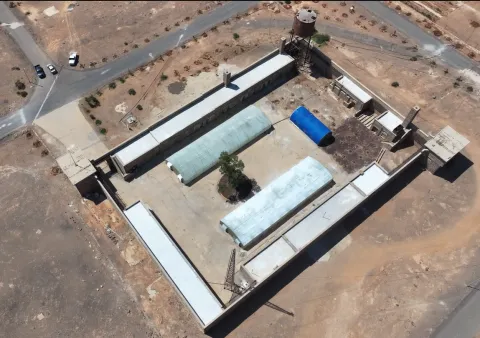
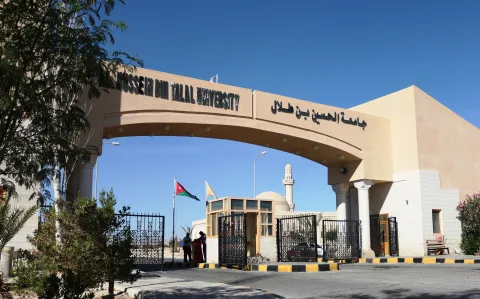
The Badia Research Program operates two field stations :


Geomorphology & Physical Resources.
The Geomorphology of Course Clastic Surfaces in Arid Environments.

- Change in traditional Badu Home layout as a function of lifestyle: from Bayt Esh-sha’r to Villa.
- Estimation of Graduate’s Number for Educational Planning of Manpower.
- Demographic Change & Population Projections.
- Managing Rangelands: Learning from Institutional Experience in Order to Promote Bedouin Participation in the Badia of Jordan (Master Thesis, University of Durham, UK).
- Attitudes and Behaviors of Consumers Toward Local and Urban.
- Markets in the Badia Region of Jordan (Degree of Doctor of Philosophy, Major in Sociology, South Dakota State University, USA).
- Bedouin Community Participation in Creating Sustainable Future: A Case Study of A’naqueed Al-Khair Sustainable Development Project, Northeastern Badia, Jordan.
- Child Growth and Nutrition in Jordan’s North Badia.
- Factors Affecting Tourists’ Willingness to Travel to the Cultural Heritage Sites in the Jordan’s Northern Badia (Degree of Doctor Philosophy in Economic Development, Major in National Economic Development, New Mexico State University, USA.).

- Livestock Marketing in the Jordanian Badia (Doctor of Philosophy Degree, Major in Marketing, University of Durham, UK).
- The Nature & Significance of Livestock Trading.
- Government Policies Affecting the Sheep Industry in the Northern Jordan Badia and Bedouin Responses (A Master of Arts degree. Department of Geography, University of Durham, UK).
- Survey of the Vegetation on Playa & Wadi (Dissertation by Douglas Newton, Reading University, Third year, Physical Geography Submission).
- Inputs into the Badia Livestock Production System.
- Stimulating Seed Germination of Oldman Saltbush (Atriplex nummularia L.) by Gamma Radiation.
- Tal Rimah: Community-Based Rangeland restoration project.
- Application of Bio-solids as a Soil Enhancer and Fertilizer to Rangeland

- Mammal Biodiversity Studies Conducted.
- An investigation into the collecting behavior of striped hyenas in the eastern desert of Jordan.
- Plant Biodiversity in Jordan.
- Animal Biodiversity.
- Climate change and hydrological balances in the Jordanian Badia.
- Location Criteria for domestic and Hazardous Waste Disposal to Landfill in the Jordanian Badia.
- Investigation of a Hybrid Wind–Photovoltaic Electrical Energy System for a Remote Community (Degree of Doctor of Philosophy, Renewable Energy, Coventry University, UK).
Projects
As a continuation of the project to preserve and document medicinal, aromatic and wild plants in the northeastern Badia region, the National Center for Research and Development, in cooperation with the Royal Botanic Garden, began conducting a high-resolution scanning to photograph plant specimens preserved in the Safawi herbarium and those preserved in Kew Gardens in the United Kingdom.
The purpose of scanning plant specimens is to provide visual material that can be accessed via scanning an electronic QR code, which allows identification of: the plant’s scientific name and common name in Arabic and English, the place of collection, the date of collection, and relevant scientific information.
The regional project aims to promote sustainable agriculture in the Levant by adopting an ecosystem-based adaptation approach.
The project was implemented in Lebanon, Syria, and Jordan, where agroforestry practices and techniques are used to improve resilience to climate change, enhance food security, and promote sustainable land management.
The project focused on increasing agricultural productivity, improving soil fertility, and enhancing farmers’ livelihoods by integrating natural ecosystems and biodiversity into farming systems. It also aims to strengthen the resilience and sustainability of agricultural and food production systems in the face of climate change through an Ecosystem-based Adaptation (EbA) approach, both at the practice and policy levels.
Key Results:
- Training around 60 farmers near the reserve on the principles of agroforestry and how to integrate them into their agricultural lands, using Ajloun Forest Reserve as a natural reference model.
- Collecting and documenting local knowledge on agroforestry practices in Ajloun.
- Holding a national-level workshop by the end of 2025 to support policy alignment and knowledge exchange, contributing to influencing Nationally Determined Contributions (NDC) policies.
Funding Partners:
IUCN and the Global EbA Fund
Ecosystem-Based Agriculture Resilience in the Levant through Agroforestry (EBAR) Project
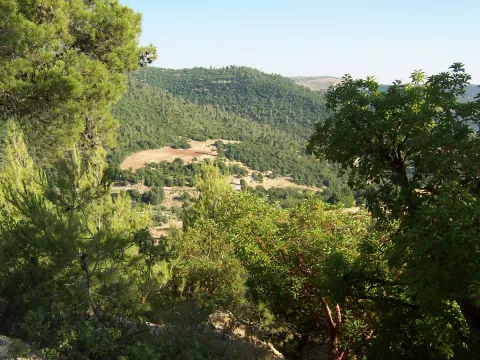
This regional initiative aims to enhance sustainable agriculture in the Levant using ecosystem-based adaptation approaches. Implemented in Lebanon, Syria, and Jordan, the project employs agroforestry practices to improve climate resilience, strengthen food security, and promote sustainable land management.
The project focuses on boosting agricultural productivity, improving soil fertility, and enhancing farmers’ livelihoods by integrating natural ecosystems and biodiversity into farming systems. It also aims to strengthen the resilience and sustainability of agricultural and food production systems against climate change through Ecosystem-based Adaptation (EbA) approaches in both practice and policy.
Approximately 60 farmers near the reserve received training on agroforestry principles and their integration into farmland, using the Ajloun reserve as a reference model.
Local knowledge of agroforestry practices in Ajloun has been collected and documented.
National-level workshop planned by the end of 2025 to support policy alignment and knowledge exchange for NDC (Nationally Determined Contributions) policy influence.